
For years, network operators have faced a frustrating trade-off: the ‘set it and forget it’ stability of fixed-function switches versus the limitless potential of programmable architectures. Fixed-function ASICs are reliable but rigid. Programmable switches offer the ultimate freedom to define custom protocols on software timelines, but they’ve historically come with a massive learning curve tax.
To bridge this gap, we are introducing the Xsight X2, powered by an integrated AI Assistant. We’re moving the conversation away from hardware constraints and back to business logic. The future of networking isn’t just programmable, it’s accessible.
The Last Mile Problem of Programmability
While Programming Protocol-independent Packet Processors (P4) gave us a high-level language, the last mile of implementation still required deep, specialized knowledge of vendor-specific externs and hardware microcode. For many, the vision of "write once, run anywhere" was met with the reality of needing a PhD in ASIC architecture just to deploy a new feature.
The Xsight X2 changes this narrative. By integrating a sophisticated AI Assistant into the development workflow, we’ve effectively bridged the gap between high-level human intent and low-level hardware execution.
Teaching an AI to Think Like a Network Engineer
We didn't treat our AI Assistant as a black box. Instead, we systematically taught it the fundamentals of switch programming through five layers of structured knowledge:
- ISA Documentation: We provided the AI with complete Instruction Set Architecture (ISA) specs with hundreds of pages covering the Parser and the Match-and-Action Processor (MAP).
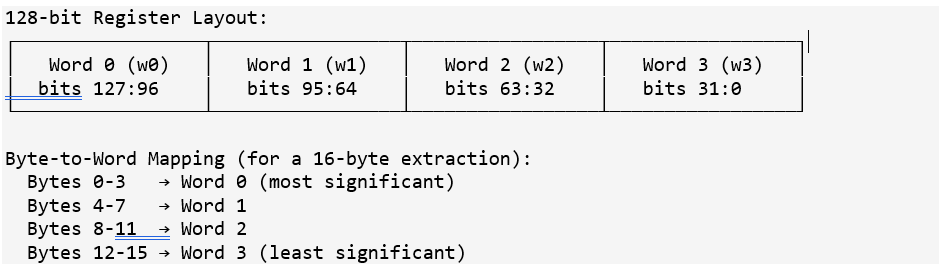
- Programming Model Concepts: The AI understands the nuances of 128-bit register layouts and how fields land after extraction.
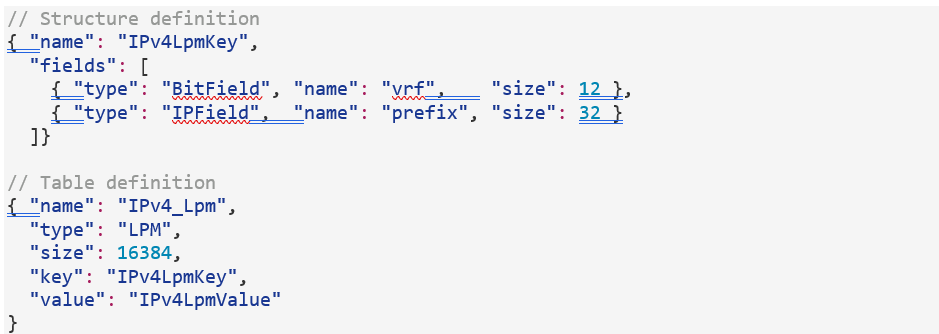
- Table Logic: It knows when to use LPM for routing, Hash tables for exact-match, or Direct tables for indexed access.
- Production-Grade Examples: We fed it real microcode from our production codebase to teach it patterns, not just syntax.

- Safety Constraints: It follows hard-won rules, like "never move the cursor backward" during parsing, to prevent subtle bugs.
The Breakthrough: Autonomous Debugging
Perhaps the most transformative shift is the AI’s ability to debug. In traditional environments, a failed test results in a cryptic trace log. An engineer would spend hours correlating thousands of log lines with source code to find a single bit-flip or register error.
Now, the AI Assistant does the forensic heavy lifting. By parsing XBM (behavioral model) traces, it can identify exactly where a packet was dropped, trace the data back to the originating register, and identify the root cause such as a wrong word selector or a missing synchronization flag.
What used to take hours of manual analysis now happens in minutes. An engineer simply says, "The packet dropped instead of forwarding," and the AI retrieves the trace, analyzes the logic, and proposes a fix.
Transparency Over Black Boxes
We made a critical design choice: the AI Assistant generates human-readable Python code, not raw assembly.
Transparency is built into the design. Engineers remain in the driver’s seat retaining full visibility, control, and the ability to audit the logic.
Instead of staring at hexadecimal strings, engineers see clean Python that uses meaningful names and clear abstractions. This ensures that the code can be audited, modified, and understood by any member of the team, regardless of their familiarity with the underlying chip.
The Era of Specialized ASIC Gatekeeping is Over
The methodology behind the Xsight X2 represents an augmentation of human talent, not a replacement for it. By absorbing the traditional learning curve into an intelligent, collaborative toolset, we are empowering a new generation of engineers to embrace programmability with confidence.
We’ve created a system where expertise is captured as living documentation, version-controlled and improved with every project. Xsight Accelerate is another step in the journey to making programmable switches accessible to everyone.
You focus on what the network should achieve; let the AI handle how to tell the hardware to do it.