
The challenge
Oxide Computer Company builds integrated cloud computers that combine compute, storage, and networking into a single rack-scale system. Their architecture requires programmable network silicon to implement custom forwarding logic, telemetry collection, and tight integration with their control plane software.
When Intel announced the discontinuation of the Tofino programmable switch platform, Oxide faced a critical decision. Their existing design relied on Tofino 2 for network programmability. The P4-based forwarding code represented significant engineering investment that they needed to preserve.
The requirements were demanding: find a migration path that maintained full programmability, preserved P4 code compatibility, and provided a long-term architectural foundation. Fixed-function switches from Broadcom or Marvell would not satisfy Oxide's need for software-defined networking at the silicon level.
The solution
Oxide evaluated X2 programmable switch silicon against their technical requirements and found an architecture that exceeded their Tofino-based design.
Migration Approach:
X2’s open ISA and P4-friendly architecture enabled a smooth migration path for existing Tofino designs. The engineering team adapted their forwarding logic for X2 while positioning the implementation to take advantage of X2’s enhanced capabilities.
Architecture Integration:
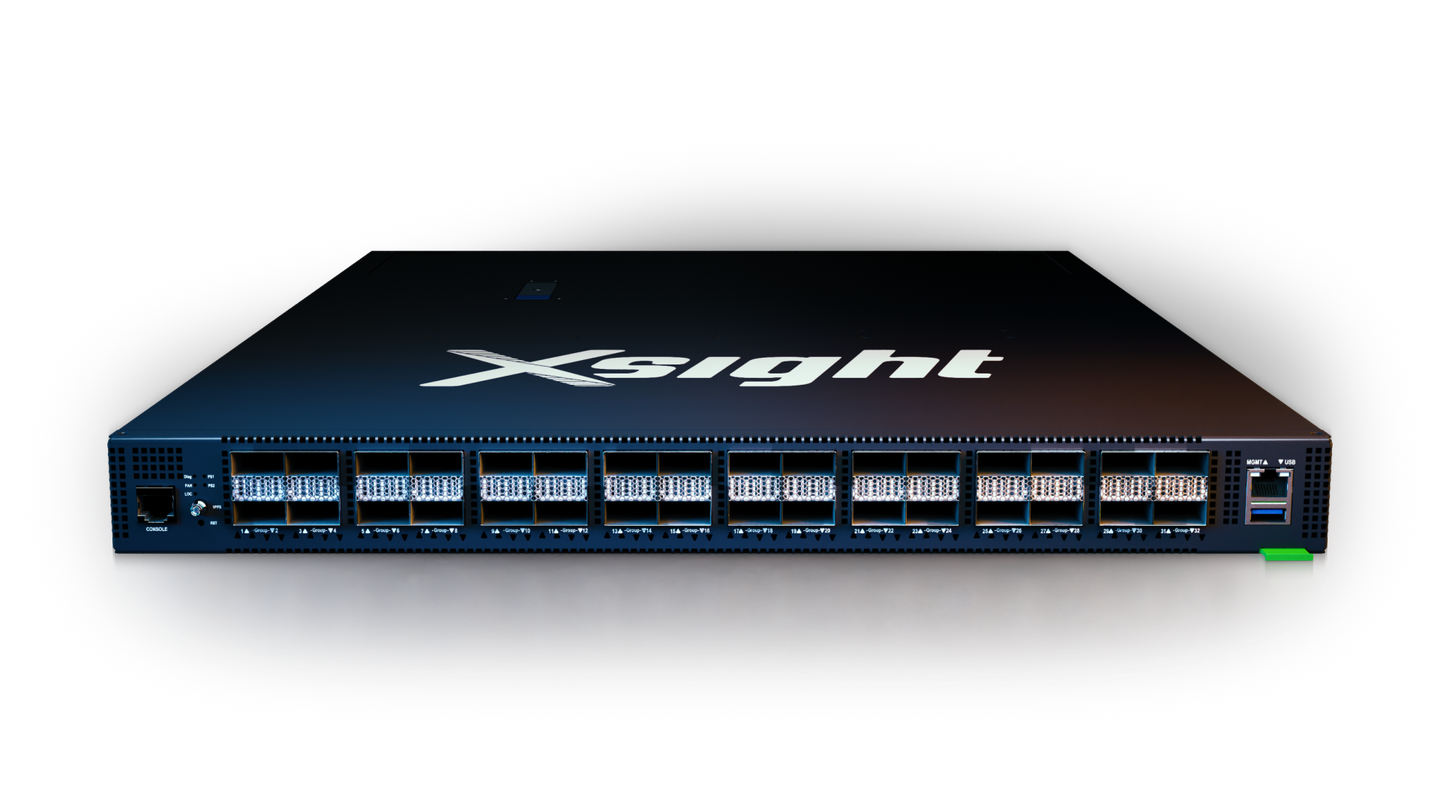
The X2 12.8T configuration provides the bandwidth and port density Oxide requires for rack-scale networking. Native 100G PAM4 SerDes enables in-rack connectivity without retimers, reducing latency and power consumption.
Open ISA (XISA)
Full visibility into switch architecture enables custom optimizations
P4 Compatibility
Existing code base migrated with enhanced parallel execution
Programmable Pipeline
Software-defined forwarding matches Oxide's control plane integration model
The open architecture aligned with Oxide's philosophy of transparent, inspectable infrastructure. Rather than treating the switch as a black box, Oxide engineers can understand and optimize network behavior at the silicon level.
The results

Production ready

Open ISA architecture
P4 Code Migration Complete:
Oxide successfully migrated their P4-based forwarding code from Tofino 2 to X2. The migration preserved existing functionality while unlocking X2's parallel execution model, which removes the recirculation penalties common in serial P4 pipelines.
Production Deployment Achieved:
X2 is ready to deploy in Oxide's production cloud computer systems. The integration validates the viability of open programmable switch silicon for enterprise-grade infrastructure.
Strategic Open ISA Commitment:
Oxide's endorsement of the XISA architecture signals confidence in the open approach. Their CTO's "x86 moment" framing positions X2 as a platform for ecosystem innovation, not just a chip replacement.
Long-term Architecture Foundation:
By selecting an open architecture with a committed roadmap, Oxide has a sustainable foundation for future product development. Unlike the Tofino experience, the open ISA model reduces single-vendor dependency.
“We strongly believe that programmability is the future of network data planes, and we believe that the deeply programmable X2 leads the industry... We have said that switching silicon is awaiting its 'x86 moment': a committed instruction set that allows for not just a world-beating chip but also unlocks open systems software innovation. We believe the moment may have finally arrived with the X2.”
Bryan Cantrill
Co-Founder and CTO, Oxide Computer Company